

Veteran Funeral Services in Sturgis, MI: Military Honors and Burial Benefits
Planning a funeral for a military veteran involves more than arranging a burial or memorial service. It is also an opportunity to recognize the individual’s service, preserve their legacy, and help their family understand the benefits available through the Department of Veterans Affairs (VA). For families in Sturgis, Michigan, understanding military funeral honors and burial assistance can make the arrangements more manageable during an emotionally difficult time.
Veteran funeral services may include military honors, a United States burial flag, a government-provided headstone or marker, burial in an eligible national cemetery, and certain financial allowances. However, these benefits have different eligibility requirements, and not every veteran automatically qualifies for every type of assistance. Families arranging Veteran Funeral Services in Sturgis, MI should understand what military honors involve, which burial benefits may be available, what paperwork is required, and how to coordinate arrangements with a funeral home and the appropriate veterans’ agencies.

Understanding Veteran Funeral Services in Sturgis, MI
Veteran funeral services recognize the military service and personal contributions of someone who served in the United States Armed Forces. These services can follow traditional funeral customs while incorporating military traditions that honor the veteran’s branch of service and years of commitment. Families may choose a traditional funeral with a viewing, religious service, and cemetery burial. Others may prefer cremation followed by a memorial service or the placement of cremated remains in a cemetery. Families can often incorporate military honors into either arrangement, depending on eligibility and coordination.
The type of service depends on the veteran’s wishes, family preferences, religious or cultural traditions, and available burial benefits. Some families choose a private cemetery close to home, while others consider a VA national cemetery or an eligible state veterans cemetery. Military funeral honors and VA burial benefits are separate from a funeral home’s services. A funeral home may help coordinate the arrangements, but the government benefits are administered through the relevant military branch, the Department of Defense, and the VA.
What Are Military Funeral Honors?
Military funeral honors are ceremonial tributes provided to eligible veterans in recognition of their service. They follow established military traditions and are intended to show respect for the deceased and appreciation for their contribution to the country.
At a minimum, the military funeral honors ceremony includes a detail of at least two uniformed military personnel, the folding and presentation of the American flag to the designated family recipient, and the playing of Taps. At least one member of the detail represents the veteran’s branch of service. Taps may be performed by a live bugler when available or through an approved ceremonial recording. The ceremony can take place at a private cemetery, a national cemetery, or another appropriate location.
Additional elements, such as a rifle volley, color guard, or additional military participants, may be available depending on the veteran’s service history, the military branch’s resources, and the location’s rules. Families should not assume that every funeral will include every possible ceremonial element. These honors are generally provided without charge to eligible veterans when properly requested. Families can begin the process by speaking with the funeral director or contacting the appropriate military funeral honors coordinator.
Who Is Eligible for Military Funeral Honors?
Military funeral honors are available to eligible individuals who served in the United States Armed Forces. Eligibility generally includes veterans who served on active duty and were discharged under conditions other than dishonorable, along with certain members of the Selected Reserve and other qualifying service categories. The veteran’s military records are used to verify eligibility. The type and length of service, discharge status, and other details may affect which benefits are available.
A family should not assume that a veteran is ineligible simply because they did not retire from the military or serve for an entire career. Some individuals who completed an initial period of obligated service in the Selected Reserve may also qualify. The best starting point is to locate the veteran’s military discharge paperwork, particularly the DD Form 214. If the veteran served in the National Guard or Reserves, other documents may be relevant, such as an NGB Form 22 or DD Form 256. If the family cannot locate the required records, assistance may be available through the Michigan Veterans Affairs Agency or the National Personnel Records Center.
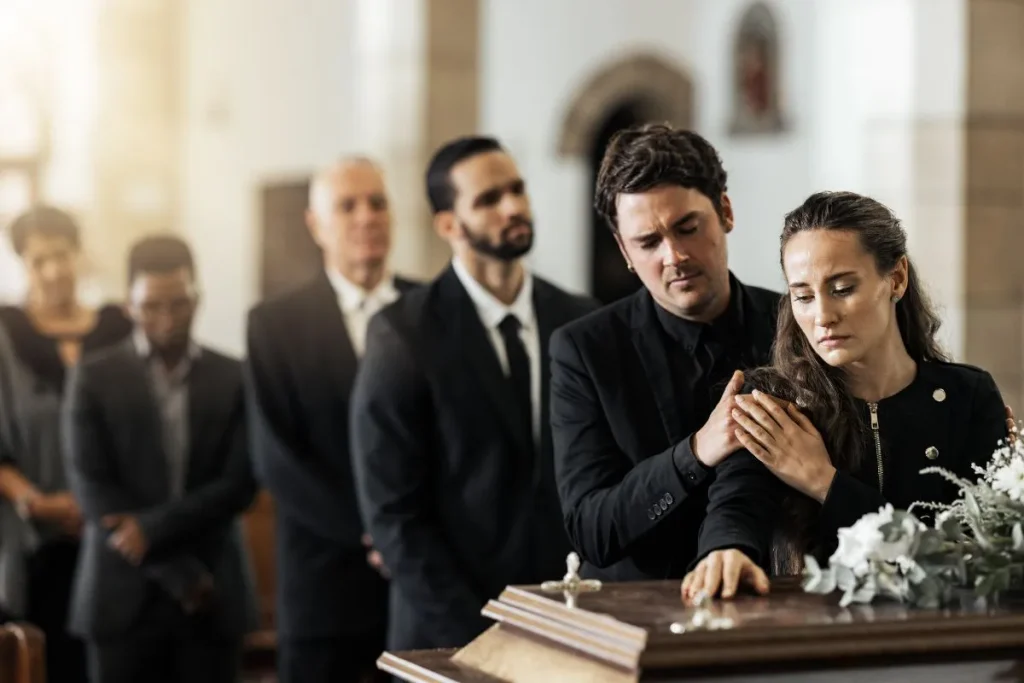
What Happens During a Military Funeral Honors Ceremony?
A military honors ceremony is usually a short but meaningful part of the funeral or committal service. The exact order can vary depending on the location and arrangements, but the central traditions remain consistent.
Folding and Presentation of the American Flag
One of the most recognized elements is the ceremonial folding of the United States flag. The flag is carefully folded by members of the military honors detail and presented to the designated family member, often the surviving spouse or next of kin. The presentation is a formal expression of gratitude for the veteran’s service. Families may wish to decide in advance who should receive the flag so that the funeral director and honors coordinator can communicate the arrangement.
Playing of Taps
Taps is traditionally played during military funerals as a final tribute. A live bugler may perform the melody when one is available. Otherwise, an authorized recording or ceremonial bugle may be used. The music provides a quiet moment for family members and attendees to reflect on the veteran’s life and service.
Military Personnel and Additional Honors
At least two uniformed military personnel are required for the core honors detail. Depending on availability and eligibility, additional participants may be involved. Some families may request additional ceremonial elements, such as a rifle salute or color guard. These are not guaranteed as part of the standard honors ceremony and should be discussed with the appropriate coordinator before the service.
VA Burial Benefits Available to Eligible Veterans
The Department of Veterans Affairs provides several burial and memorial benefits to eligible veterans and, in certain circumstances, their family members. These benefits are designed to recognize military service and reduce some of the expenses associated with final arrangements.
The specific benefits depend on the veteran’s eligibility, discharge status, service history, burial location, and circumstances of death.
Burial in a VA National Cemetery
Eligible veterans may qualify for burial in a VA national cemetery where space is available. The benefit generally includes a gravesite, opening and closing of the grave, a government-provided grave liner, a government headstone or marker, and perpetual care of the gravesite. Eligible veterans may also receive military funeral honors, a burial flag, and a Presidential Memorial Certificate. A surviving spouse and eligible dependent children may also qualify for burial in a national cemetery, even if the veteran is not buried there first. Eligibility should be confirmed with the National Cemetery Administration.
Families in Sturgis, MI, may consider whether a national cemetery is appropriate for their circumstances. Michigan has several veterans cemetery options, including Fort Custer National Cemetery in Augusta. Families should contact the cemetery directly to confirm eligibility, availability, scheduling requirements, and arrangements. It is important to remember that the VA national cemetery benefit does not cover every funeral expense. Services and merchandise obtained from a funeral home, including certain transportation, preparation, ceremony, and casket or urn costs, may remain the family’s responsibility.

VA Burial Allowance
Some families may qualify for a VA burial allowance that helps reimburse eligible funeral and burial expenses. This is a financial benefit rather than a guarantee that the entire funeral will be paid for by the government. Eligibility may depend on whether the veteran’s death was related to military service, whether the veteran was receiving VA compensation or pension, whether the veteran was under VA care at the time of death, and whether the person requesting reimbursement paid the expenses.
Government-Provided Headstones and Markers
Eligible veterans may receive a government-furnished headstone or marker. These memorials can be placed in a VA national cemetery, an eligible state veterans cemetery, or a private cemetery, subject to the applicable rules. Available styles may include upright headstones, flat markers, and niche markers for eligible cremated remains. The cemetery’s regulations may affect which style can be installed.
For veterans buried in private cemeteries, families generally need to submit the required application and supporting documents. Cemetery officials may also have specifications concerning dimensions, materials, placement, and installation.
Burial Flags
The VA may provide one United States burial flag for an eligible veteran. The flag can be used to drape the casket or accompany the urn during the service.
After the ceremony, the flag is generally presented to the designated next of kin or another eligible recipient. Families can request the flag using VA Form 27-2008, Application for United States Flag for Burial Purposes. A funeral director can often help the family complete the application and coordinate the flag before the funeral.
Presidential Memorial Certificate
Eligible veterans may also receive a Presidential Memorial Certificate. This engraved certificate bears the President’s signature and expresses the nation’s recognition of the veteran’s military service. It is a commemorative item that families may keep alongside military photographs, service records, medals, and other personal belongings.
Burial Benefits for Veterans Who Choose Cremation
Veterans’ burial benefits are not limited to traditional casket burial. Eligible veterans may receive certain VA burial and memorial benefits when their families choose cremation. Cremated remains may be placed in a VA national cemetery, including in an eligible columbarium or gravesite. The VA generally provides the same national cemetery burial benefits for eligible cremated remains as it does for casketed remains.
Families may also arrange a private memorial service before or after cremation and request military funeral honors as part of the ceremony. However, families should understand that the VA does not directly pay for cremation services. Funeral home services, cremation costs, urns, and other arrangements may be the family’s responsibility. An eligible burial allowance may help reimburse some expenses, depending on the circumstances. Before making final arrangements, families should confirm whether the selected cemetery accepts cremated remains and what documentation is required.
Documents Needed to Arrange Veteran Funeral Services
Having the veteran’s military and personal records available can help prevent unnecessary delays. These documents are used to verify eligibility, request military honors, arrange cemetery burial, and apply for applicable benefits.
The most important document is usually the DD Form 214, also known as the Certificate of Release or Discharge from Active Duty. It provides information about the veteran’s military service and discharge status.
Depending on the veteran’s service history, other records may be required. These can include:
- DD Form 214 or other military separation documents.
- NGB Form 22 for qualifying National Guard service.
- DD Form 256 or relevant Reserve documentation.
- Certified death certificate.
- Marriage certificate or other proof of relationship, when required.
- Itemized funeral and burial receipts for reimbursement claims.
- Cemetery information and burial authorization documents.
Families should keep copies of important records and avoid sending original documents unless an agency specifically requests them.
If the DD Form 214 is missing, the family can request military records through the National Archives or seek assistance from the Michigan Veterans Affairs Agency. The agency may also help identify the correct documentation for National Guard or Reserve service.
How Families in Sturgis, MI, Can Arrange Military Funeral Honors
Coordinating military funeral honors involves communication between the family, funeral director, military honors coordinator, and cemetery. Starting early can help ensure that the necessary personnel and documents are available on the day of the service. The first step is to inform the funeral director that the deceased was a veteran and that the family would like military honors. Provide the available military discharge paperwork so the funeral director can help verify eligibility.
The next step is to request the honors detail through the appropriate military branch or coordinator. The family should confirm the service date, time, location, and any additional ceremonial preferences. If the family plans to use a national cemetery, burial scheduling must also be coordinated with the National Cemetery Administration. Families should confirm whether the cemetery can accommodate the preferred date and whether the military honors ceremony will take place at the committal shelter or another designated location.
For families making arrangements without a funeral home, the Michigan Veterans Affairs Agency can provide information about required records and available assistance. A local County Veterans Service Officer may also help explain benefits and guide the family through the application process.
Choosing Between a Private Cemetery and a Veterans Cemetery
Families in Sturgis may consider a private cemetery or an eligible veterans cemetery when deciding where a veteran should be laid to rest. Both options can provide a meaningful place for remembrance, but the benefits and arrangements may differ. A private cemetery may be preferred when the family wants the veteran to be buried near relatives or in a location with personal significance. Eligible veterans buried in private cemeteries may still qualify for certain memorial benefits, such as a government headstone or marker and a burial flag. Military funeral honors may also be requested.
A VA national cemetery offers specific benefits to eligible veterans, including a government-provided gravesite, opening and closing of the grave, a grave liner, a government headstone or marker, and perpetual care. The right choice depends on eligibility, family wishes, location, cemetery availability, and the type of memorial the family wants. Families should compare the arrangements and confirm the benefits available before making a final decision.
Planning Ahead for a Veteran’s Funeral
Veterans and their families can reduce uncertainty by discussing funeral preferences before they are needed. Advance planning allows family members to understand the veteran’s wishes and locate the documents required to arrange benefits.
A veteran may wish to record their preferred burial location, whether they want a traditional burial or cremation, their preferred funeral arrangements, and whether they would like military honors. Families can also identify the person who should receive the burial flag. It is helpful to keep the DD Form 214 and other military records in a secure but accessible location. Family members should know where these documents are stored and who to contact if they need assistance.
Veterans may also request a pre-need eligibility determination for burial in a VA national cemetery. This can help establish eligibility before a death occurs, although final arrangements and scheduling still need to be coordinated when the time comes. Advance planning does not require a family to make every decision immediately. Even a simple record of the veteran’s wishes and military service information can make a meaningful difference later.
FAQs
Are military funeral honors free for eligible veterans?
Yes. Military funeral honors are provided without charge to eligible veterans when requested. The standard ceremony includes a military detail, the folding and presentation of the American flag, and the playing of Taps. Additional honors may depend on availability and eligibility.
Does the VA pay for a veteran’s entire funeral?
No. VA burial benefits do not automatically cover the full cost of a funeral. Eligible families may receive certain burial allowances, while qualifying veterans may receive burial in a VA national cemetery and other memorial benefits. Funeral home services and merchandise may remain the family’s responsibility.
Can a veteran receive military honors at a private cemetery?
Yes. Eligible veterans may receive military funeral honors at private cemeteries as well as national cemeteries. The family or funeral director must request the honors and provide the documentation needed to verify eligibility.
Can veterans who choose cremation receive military honors?
Yes. Eligible veterans may receive military honors when their families choose cremation. The ceremony can be arranged around a memorial service or the placement of cremated remains, depending on the family’s plans and the cemetery’s requirements.
What paperwork is needed for military burial benefits?
The DD Form 214 is commonly used to verify military service and discharge status. Other records may be required for National Guard or Reserve service. Families may also need a death certificate, proof of relationship, cemetery details, and itemized receipts when applying for reimbursement.
Where can families in Sturgis, Michigan, get help with veterans’ burial benefits?
Families can begin with a funeral director, the Michigan Veterans Affairs Agency, or a County Veterans Service Officer. These resources can help explain eligibility, locate military records, request honors, and understand the VA application process.
Honoring a Veteran’s Service and Legacy
Arranging a veteran’s funeral involves practical decisions, important paperwork, and meaningful opportunities to recognize a lifetime of service. Military funeral honors, burial flags, government headstones, national cemetery burial, and eligible financial allowances can help families create a respectful tribute while understanding the assistance available to them.
For families in Sturgis, MI, learning about these options early can make it easier to coordinate with the appropriate military and veterans’ agencies. Confirming eligibility, gathering military records, and discussing the veteran’s wishes can help ensure that the arrangements reflect the individual’s service, values, and legacy. The most important step is to verify each benefit with the VA or the relevant military authority before making financial or cemetery arrangements. Benefits vary by service history and individual circumstances, and official guidance can help families make informed decisions during a difficult time.
